
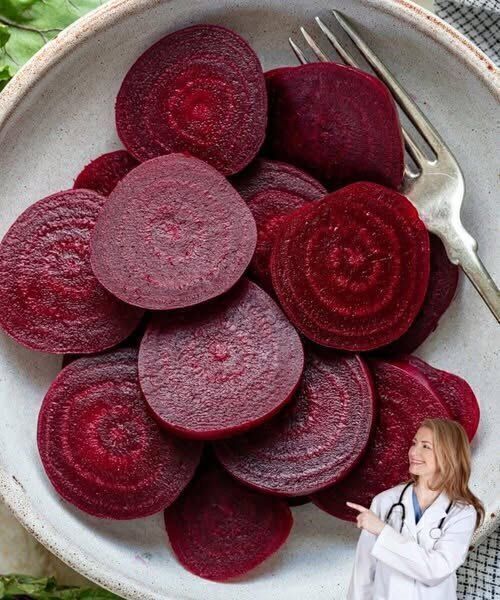
Do Beets Help with Blood Pressure?
One of the most widely discussed health benefits of beetroot is its potential impact on blood pressure.
Because nitric oxide relaxes blood vessels, consuming nitrate-rich foods may contribute to slightly lower blood pressure levels.
Several studies have observed modest reductions in blood pressure among individuals who consume beet juice regularly.
However, these effects are generally small and vary depending on the person’s overall health and diet.
Beets should be viewed as part of a broader approach to cardiovascular health that includes:
-
Regular physical activity
-
Balanced nutrition
-
Reduced sodium intake
-
Stress management
No single food can replace these lifestyle factors.
Why Beet Juice Is Popular—but Not Always Better
Beet juice has become a popular health drink in recent years.
Juicing concentrates certain nutrients, making it easier to consume large amounts quickly.
However, juice also removes most of the fiber, which plays an important role in digestion and blood sugar regulation.
Without fiber, sugars in the juice enter the bloodstream more quickly.
For this reason, whole beets often provide more balanced benefits than beet juice alone.
Eating roasted, steamed, or grated beets allows the body to receive both the nutrients and the fiber.
Common Side Effects People Notice
While beets are safe for most people, they can cause a few harmless but surprising effects.
One of the most common is beeturia, a condition where urine or stool appears reddish after eating beets.
This happens because the betalain pigments pass through the digestive system and are excreted by the body.
Although it can be alarming if someone doesn’t expect it, beeturia is completely harmless.
Not everyone experiences it, but it occurs in a noticeable percentage of people.
Kidney Stone Considerations
Beets contain compounds known as oxalates.
Oxalates occur naturally in many plant foods, including spinach, almonds, and sweet potatoes.
For most people, oxalates are not a problem.
However, individuals who are prone to certain types of kidney stones may need to moderate their intake of high-oxalate foods.
This does not mean beets must be avoided entirely, but it may be wise to consume them in balanced amounts rather than in very large quantities.
Anyone with a history of kidney stones should consult a healthcare professional before dramatically increasing beet consumption.
Interaction With Blood Pressure Medication
see continuation on next page
ADVERTISEMENT
