
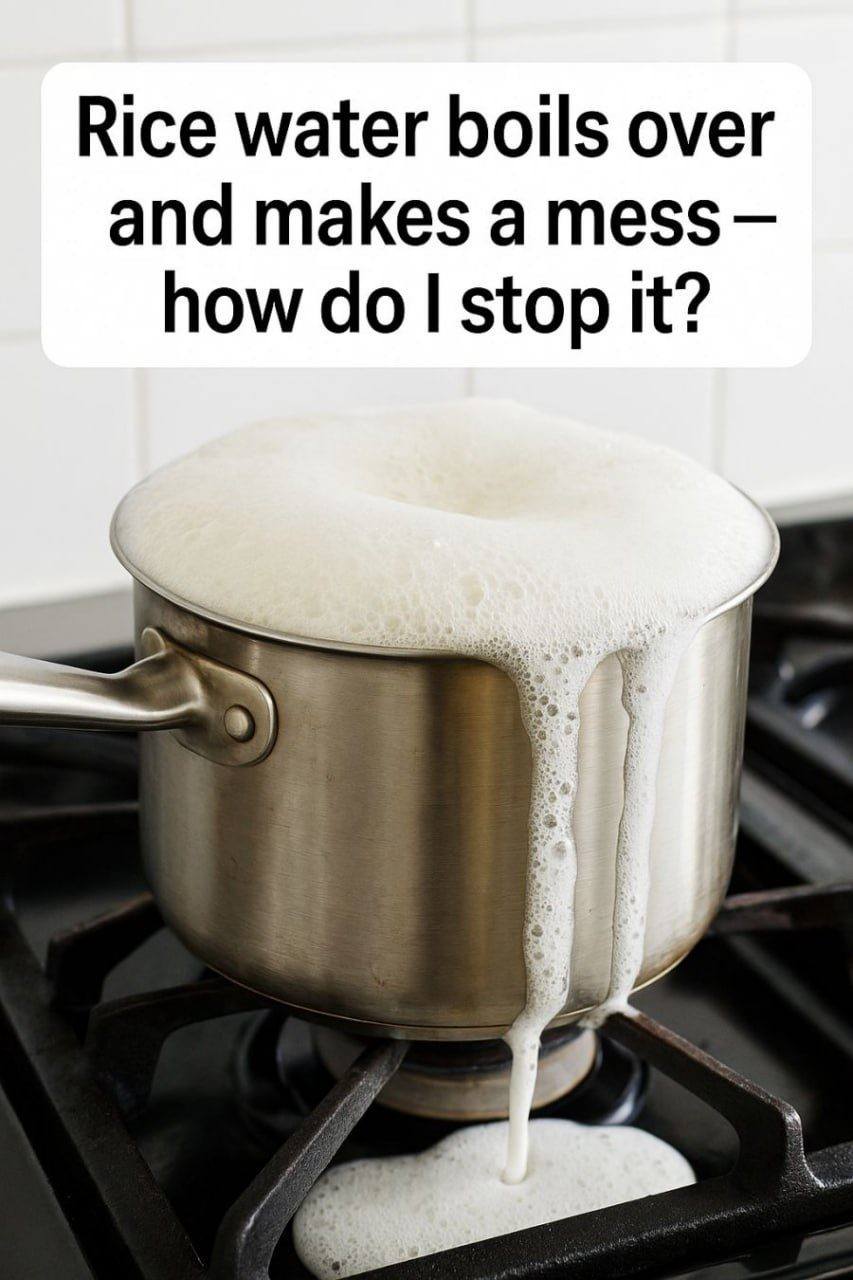
If you’ve ever cooked rice, chances are you’ve faced one of the most common kitchen frustrations: the pot suddenly boils over, sending starchy water across the stovetop and leaving behind a sticky mess.
It’s annoying, messy, and surprisingly easy to trigger.
The good news is that rice boiling over is completely preventable. Once you understand why it happens and apply a few simple techniques, you can cook rice cleanly and consistently every time.
Why Rice Water Boils Over
Understanding the cause makes the solution much easier.
The Role of Starch
Rice naturally contains a lot of starch. As it cooks, starch is released into the water, thickening the liquid and creating foam.
Unlike regular water bubbles that burst quickly, starchy bubbles are stronger and longer-lasting. They pile up on top of each other, forming foam that rises toward the rim of the pot.
Steam Pressure and Overflow
When the water reaches a rolling boil, steam builds rapidly beneath the foam. Since the starchy bubbles trap steam instead of releasing it, the pressure pushes the liquid upward until it spills over.
Common Mistakes That Cause Rice to Boil Over
Several cooking habits make boil-overs more likely:
- Using a pot that’s too small
- Cooking on high heat the entire time
- Skipping the rice rinse
- Adding too much water
- Sealing the lid too tightly
- Stirring too often
Even one of these mistakes can turn a calm simmer into a stovetop disaster.
9 Easy Ways to Prevent Rice from Boiling Over
1. Rinse Your Rice Thoroughly
Rinsing rice is the single most effective way to reduce boil-overs.
Why It Works
Rinsing removes excess surface starch, which means:
- Less foam
- Fewer stable bubbles
- Reduced overflow risk
How to Rinse Rice Properly
- Place rice in a bowl or sieve
- Add cold water
- Swirl the rice gently with your hand
- Drain the water
- Repeat 2–4 times until the water looks mostly clear
This simple step can dramatically reduce mess.
2. Use a Larger Pot
see continuation on next page
ADVERTISEMENT
