
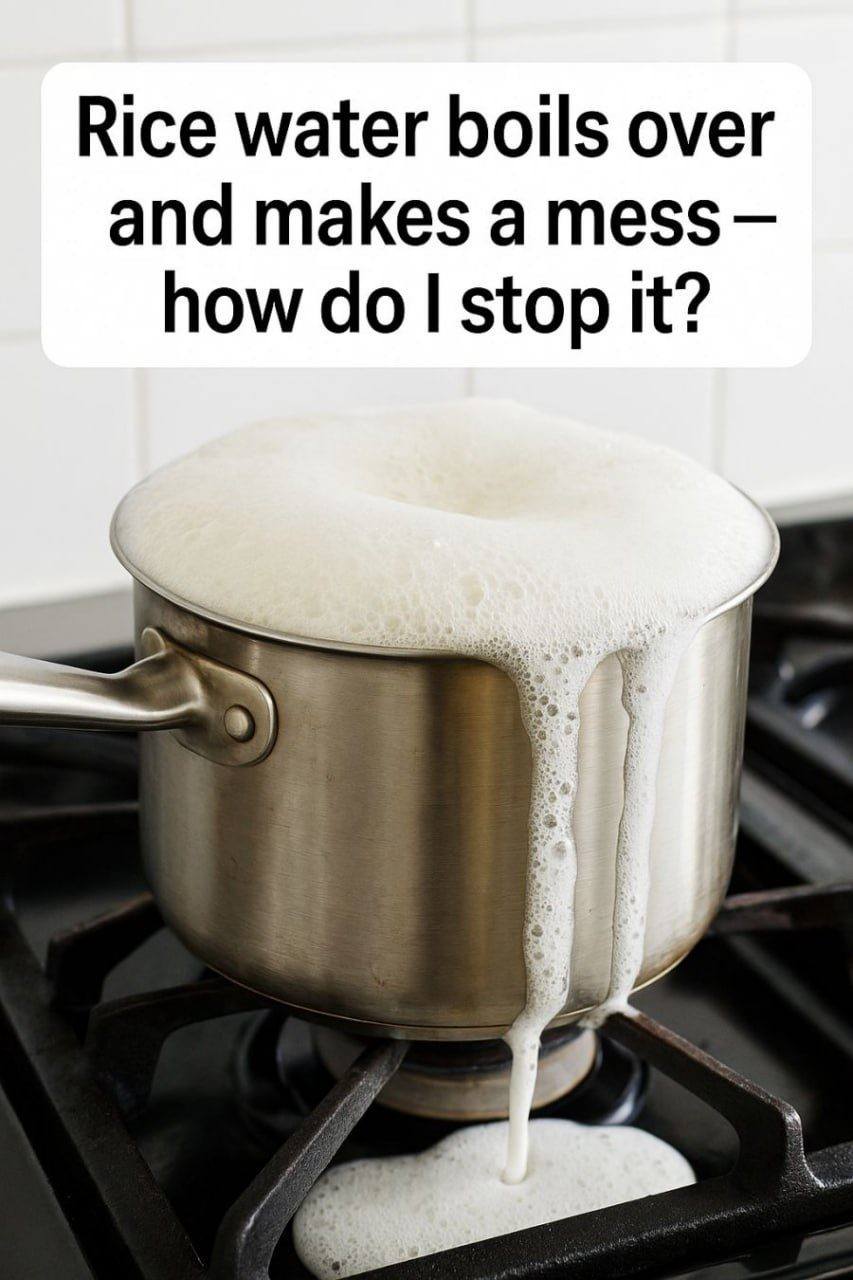
2. Use a Larger Pot
Rice expands while cooking, and the foam expands too.
The Ideal Pot Size
Choose a pot that can hold at least 2–3 times the total volume of the rice and water combined.
A larger pot gives bubbles room to rise safely without spilling over.
Benefits of a Larger Pot
- More space for foam
- Better steam circulation
- More even heat distribution
When in doubt, use a bigger pot.
3. Lower the Heat After Boiling
One of the most common mistakes is leaving rice at a full boil for the entire cooking process.
The Correct Heat Method
- Bring the rice and water to a boil
- Immediately reduce heat to low or medium-low
- Let the rice simmer gently
Rice cooks perfectly at a simmer. It does not need aggressive boiling.
4. Leave the Lid Slightly Ajar
A tightly sealed lid traps too much steam inside the pot.
Easy Fix
- Shift the lid slightly off-center
- Or prop it open with a wooden spoon
This allows excess steam to escape gradually and helps prevent pressure buildup.
5. Add a Small Amount of Oil or Butter
This classic kitchen trick works surprisingly well.
Why It Helps
Fat reduces surface tension, causing bubbles to collapse more quickly.
How Much to Use
Add:
- ½ to 1 teaspoon of oil or butter
This reduces foaming without significantly changing the flavor.
6. Try the Wooden Spoon Trick
You’ve probably seen people place a wooden spoon across the top of a pot.
Does It Actually Work?
Yes — temporarily.
The spoon interrupts rising bubbles and slows foam from overflowing.
Important Limitation
It works best:
- At moderate heat
- For short cooking periods
It’s useful, but it shouldn’t be your only strategy.
7. Use the Correct Water Ratio
see continuation on next page
ADVERTISEMENT
