
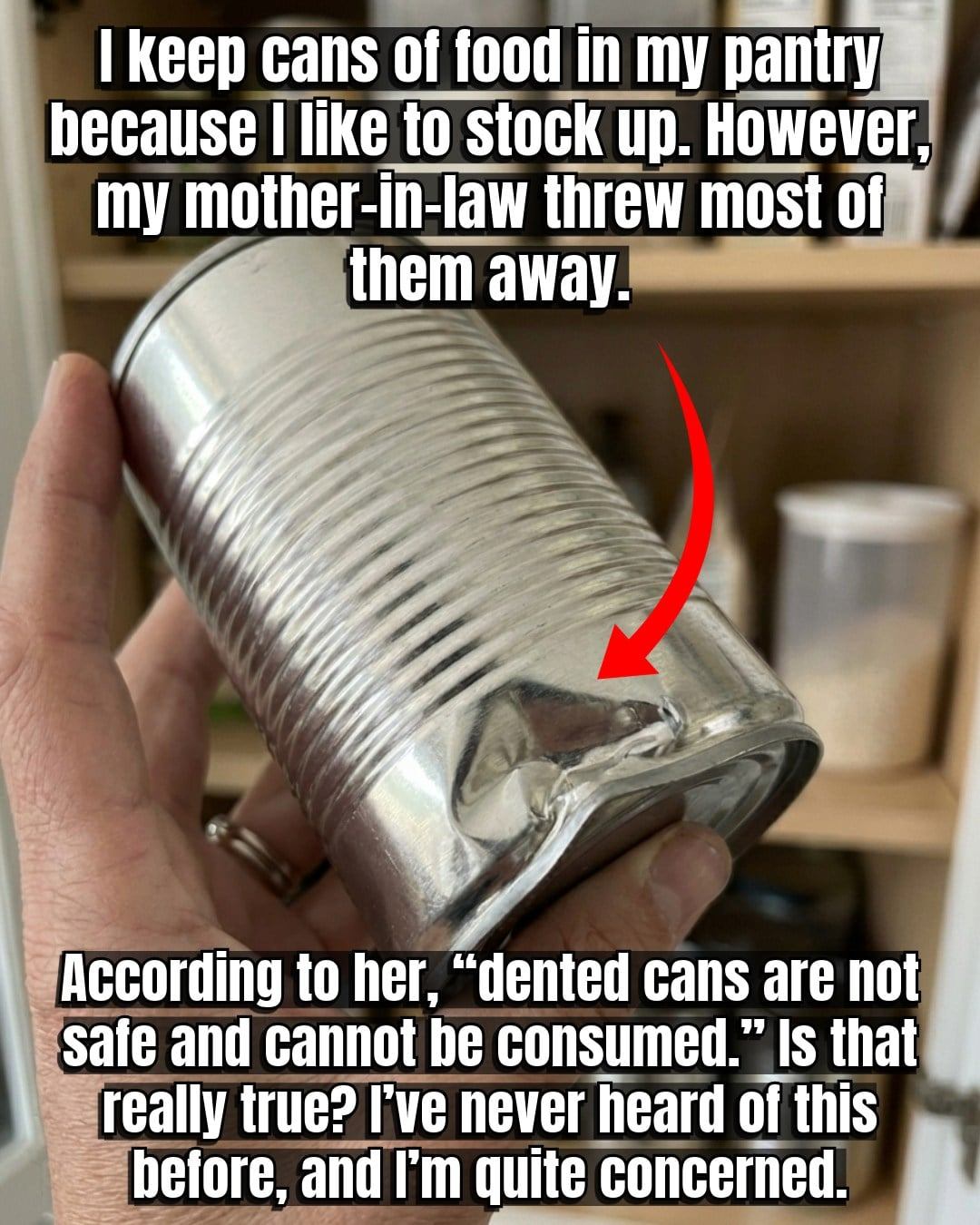
The concern about dented cans comes from one key idea: damage might break the airtight seal or create conditions where bacteria can enter or grow.
However, not all dents are the same. This is where a lot of confusion happens. Some dents are harmless surface imperfections, while others can indicate potential contamination risk.
The safety of a dented can depends on several factors:
Where the dent is located
How deep or sharp the dent is
Whether the seam or seal is affected
Whether the can is leaking, bulging, or rusted
Understanding these differences is essential before deciding whether a can should be thrown away.
When dented cans are usually still safe
Most minor dents do not make canned food unsafe. In fact, food safety authorities generally agree that many dented cans are perfectly fine to consume.
A can is usually considered safe if:
1. The dent is smooth and shallow
If the dent is small, rounded, and does not have sharp edges, it typically does not compromise the can’s seal or integrity. These kinds of dents often happen during transport or stocking in stores and are mostly cosmetic.
2. The dent is not on a seam or rim
The seams (the edges where the can is sealed) are the most critical structural points. If a dent is located away from these areas, the risk is much lower.
3. The can is not leaking or bulging
A leaking can means the seal has been broken, which is a red flag. A bulging can is even more serious because it may indicate gas production from bacterial growth inside.
4. The can does not show signs of rust or corrosion
Surface rust that doesn’t penetrate the metal is usually not a problem, but deep rust can weaken the can and potentially allow contamination.
In these safe cases, the contents inside are almost always fine.
When dented cans can be dangerous
While many dents are harmless, there are certain situations where a dented can should definitely not be consumed.
1. Deep dents with sharp creases
If a dent is deep enough to create a sharp fold or crease in the metal, it can weaken the structure of the can. This may increase the risk of tiny cracks forming, which could allow bacteria to enter.
2. Dents on the seam or edge
If the damage is located on the top, bottom, or side seam, the risk is significantly higher. These are the points where the can is sealed, and any disruption can compromise sterility.
3. Bulging cans
A bulging can is a serious warning sign. It often indicates gas production from microbial activity inside the can. This can be associated with Clostridium botulinum, which produces botulinum toxin—a rare but extremely dangerous substance.
4. Leaking liquid or hissing sounds
Any sign that the contents are escaping or that pressure has built up inside is a strong indication that the can should not be used.
5. Severe rust or corrosion
If rust has eaten through the metal or created holes, the protective barrier is gone, and contamination is possible.
The science behind the risk: why botulism matters
One of the main reasons people are cautious about damaged cans is botulism, a rare but serious illness caused by toxins produced by Clostridium botulinum.
This bacterium thrives in low-oxygen environments—exactly the kind created inside sealed cans. If a can is properly processed, the bacteria should be destroyed. But if the seal is compromised, conditions may allow contamination or growth.
What makes botulism especially concerning is that the toxin is invisible, odorless, and tasteless. You cannot tell by looking or smelling whether food is contaminated.
However, it’s important to keep perspective: modern food production standards are extremely strict, and cases of botulism from commercially canned foods are very rare. The real risk usually comes from visibly damaged or improperly processed cans.
Why your mother-in-law might believe all dented cans are unsafe
see continuation on next page
ADVERTISEMENT
