
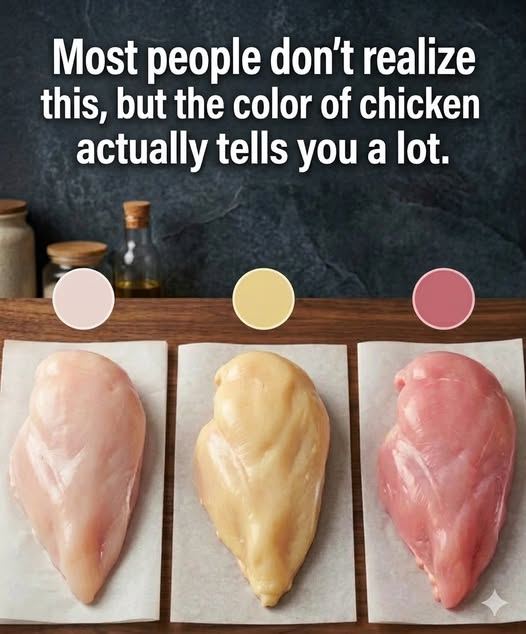
What Chicken Color Really Means: Pale vs Yellow Meat Explained
When you’re standing in front of the meat section, it’s hard not to notice the difference. Some chicken looks pale, almost pinkish-white, while others have a deeper yellow tone that immediately stands out. It’s a small detail, but one that often leads people to assume one must be fresher, healthier, or simply better than the other.
In reality, color alone doesn’t tell you what you think it does.
The appearance of chicken is shaped by a combination of factors—mainly diet, environment, and how the bird was raised. Once you understand those, the difference between pale and yellow meat becomes much less mysterious and much more practical.
Pale chicken is most commonly associated with large-scale farming systems. These birds are typically raised indoors, in controlled environments, with carefully formulated feed designed for consistent growth. This approach keeps production stable and costs lower, which is why this type of chicken is the most widely available. The result is meat that is lighter in color and usually milder in flavor. It’s not inferior—it’s simply produced with efficiency as the priority.
On the other hand, yellow chicken often gets its color from what the bird eats. Diets rich in natural pigments—like corn, grass, and certain plants—can tint the skin and fat, giving that warmer, golden appearance. This is why chickens with access to outdoor environments, where they can forage more freely, sometimes develop that distinct color.
But this is where it’s important to stay grounded: yellow doesn’t automatically mean better.
see continuation on next page
ADVERTISEMENT
