
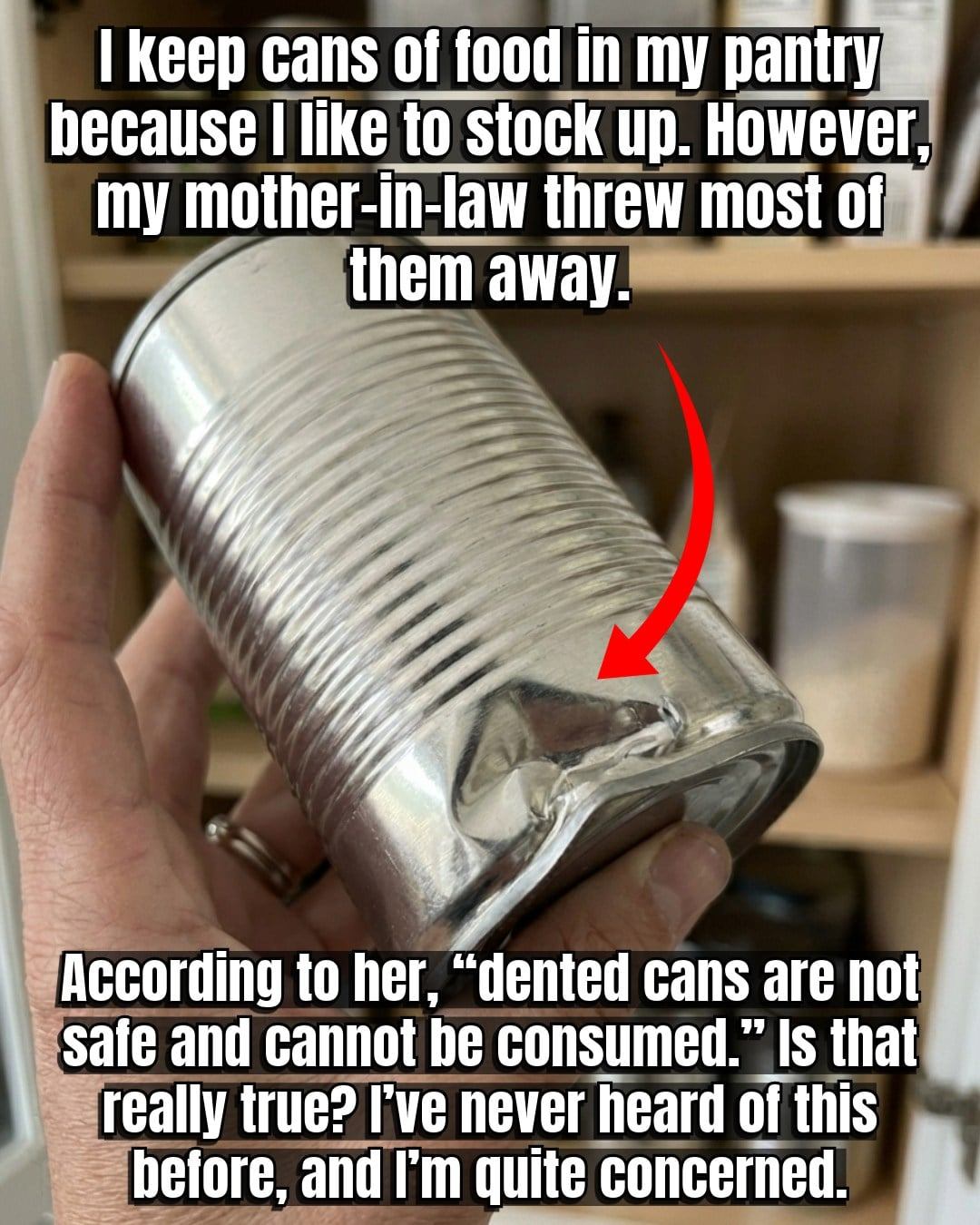
Many people grew up hearing a very simple rule: “Never eat from dented cans.” This rule was often taught as a precautionary measure in earlier generations when food safety standards were less consistent and information was less detailed.
In the past, it was safer to be overly cautious because:
Home canning errors were more common
Manufacturing standards varied more widely
Public awareness of foodborne illness was lower
So rather than teach complex guidelines about dent types and risks, many households adopted a blanket rule: if it’s dented, throw it away.
While this approach is safe, it is not always necessary in modern food systems.
What modern food safety guidelines actually suggest
Food safety organizations generally take a more nuanced view. Instead of saying “all dented cans are bad,” they classify risk based on severity and location of damage.
In simple terms:
Minor dents: usually safe
Deep dents or seam damage: unsafe
Bulging or leaking cans: unsafe
This means your pantry may not have been as risky as your mother-in-law believed. However, her instinct to prioritize caution is not entirely wrong—it simply follows a stricter interpretation of safety rules.
How to inspect cans before using them
If you want to be more confident about the safety of your canned goods, you can adopt a simple inspection routine:
Check the lid and bottom for bulging
Look for deep dents or sharp creases
Inspect seams carefully for damage
Make sure there are no leaks or sticky residue
Check for rust that has penetrated the surface
Listen for hissing when opening (a warning sign)
Smell and visually inspect contents after opening
If anything seems unusual, it is better to discard the can rather than take a risk.
How to properly store canned food to prevent damage
Preventing dented cans in the first place is also helpful. Proper storage reduces the chance of damage and extends shelf life.
Store cans in a cool, dry place
Avoid stacking them too high where they can fall
Rotate older cans to the front (first in, first out system)
Keep them away from heavy objects that could fall on them
Check pantry items periodically for damage
Good storage habits help ensure your pantry stays safe and organized.
Finding a balanced perspective
So, was your mother-in-law right to throw away the cans?
The answer is both yes and no.
She was right in the sense that damaged cans can sometimes pose a risk, and caution is always better than ignoring obvious warning signs like bulging or deep structural damage. Her instinct was protective.
However, the idea that all dented cans are unsafe is not accurate. Many dented cans are completely safe to eat, especially if the dent is minor and does not affect the seams or seal.
The key is not fear, but awareness. Understanding the difference between harmless cosmetic damage and true structural compromise allows you to make informed decisions rather than relying on blanket rules.
Final thoughts
Canned food remains one of the most reliable and practical food storage methods available. It is designed to be safe, stable, and long-lasting. While dents can understandably raise concern, they do not automatically mean danger.
Your pantry likely wasn’t a hazard zone—it just contained a mix of perfectly fine cans and possibly a few that were better off discarded. Your mother-in-law’s reaction came from caution, but modern food safety understanding gives a more detailed and reassuring picture.
In the end, the best approach is a balanced one: respect clear warning signs, but don’t let minor imperfections lead to unnecessary waste.
ADVERTISEMENT
