
When NOT to Use Banana Peel Flour
There are situations where banana peel flour is more trouble than benefit:
- Poorly draining soil (it can add organic matter that holds moisture if overapplied)
- Already high-potassium soil (can imbalance nutrient uptake)
- Potted plants prone to gnats (indoor soils)
- Gardens with rodent pressure if you apply too heavily or leave it on the surface
If your roses already get a complete fertilizer and bloom well, banana peel flour should stay a small “bonus,” not a major input.
Compost vs Banana Peel Flour: Which Is Better?
They’re different tools.
- Compost improves soil structure, microbial life, and offers a broad spectrum of nutrients in gentle amounts.
- Banana peel flour is a targeted scrap-based amendment that leans toward potassium support.
For long-term plant health, compost is often the foundation. Banana peel flour can be the add-on.
Troubleshooting: If Roses Still Won’t Bloom
If you’re adding banana peel flour but bloom performance is poor, the issue is often one of these:
- Not enough sun (roses need strong light)
- Too much nitrogen (lush leaves, few blooms)
- Poor pruning timing (wrong cuts remove bloom wood)
- Water stress (either drought or constantly wet soil)
- Disease (black spot, mildew) weakening the plant
- Soil pH issues affecting nutrient uptake
Banana peel flour can’t override these fundamentals. Fix the basics, then use amendments for extra support.
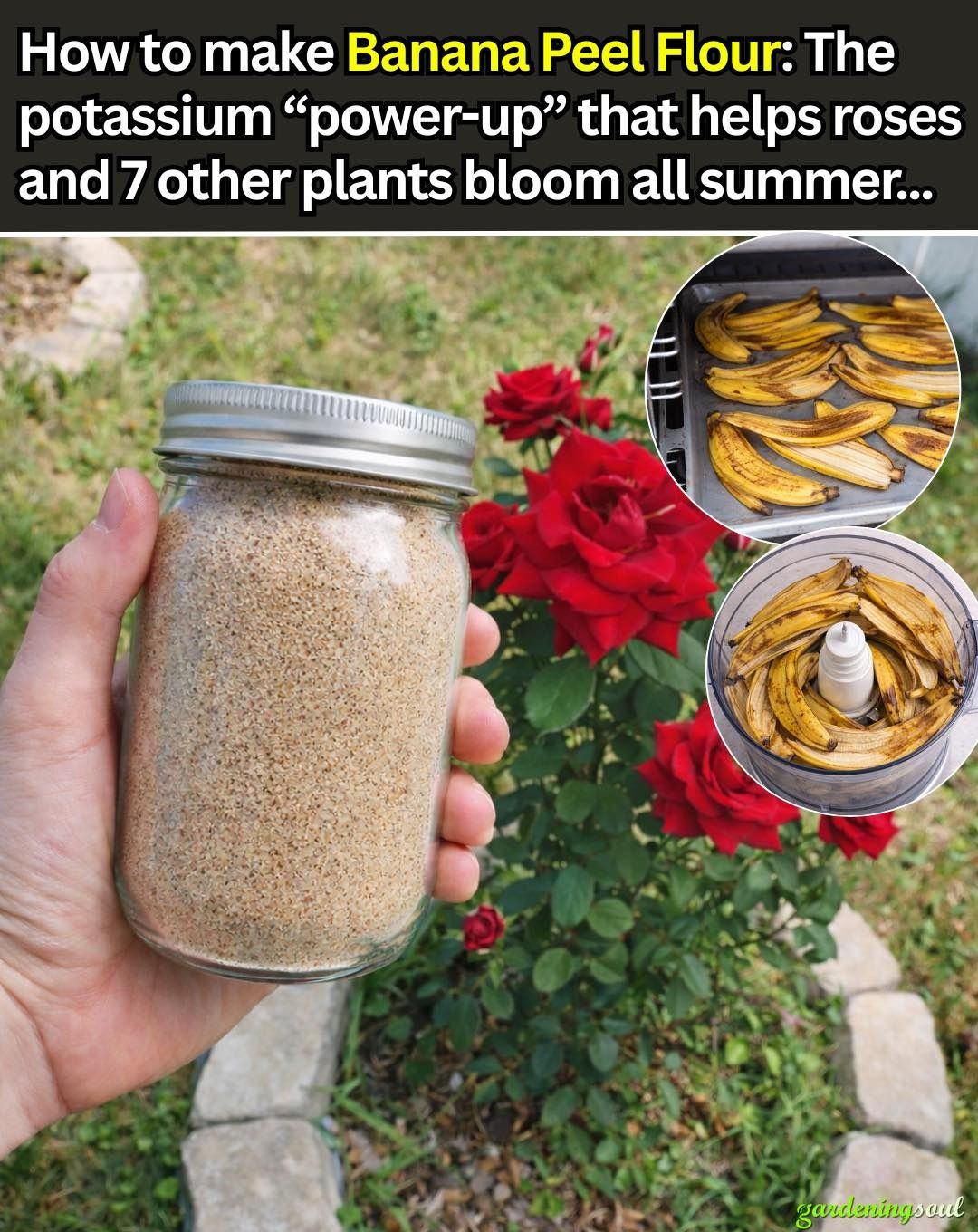
Banana peel flour is a smart way to recycle kitchen waste into a usable garden supplement. It’s cleaner than burying whole peels, easier to measure, and breaks down more evenly in soil.
ADVERTISEMENT
