
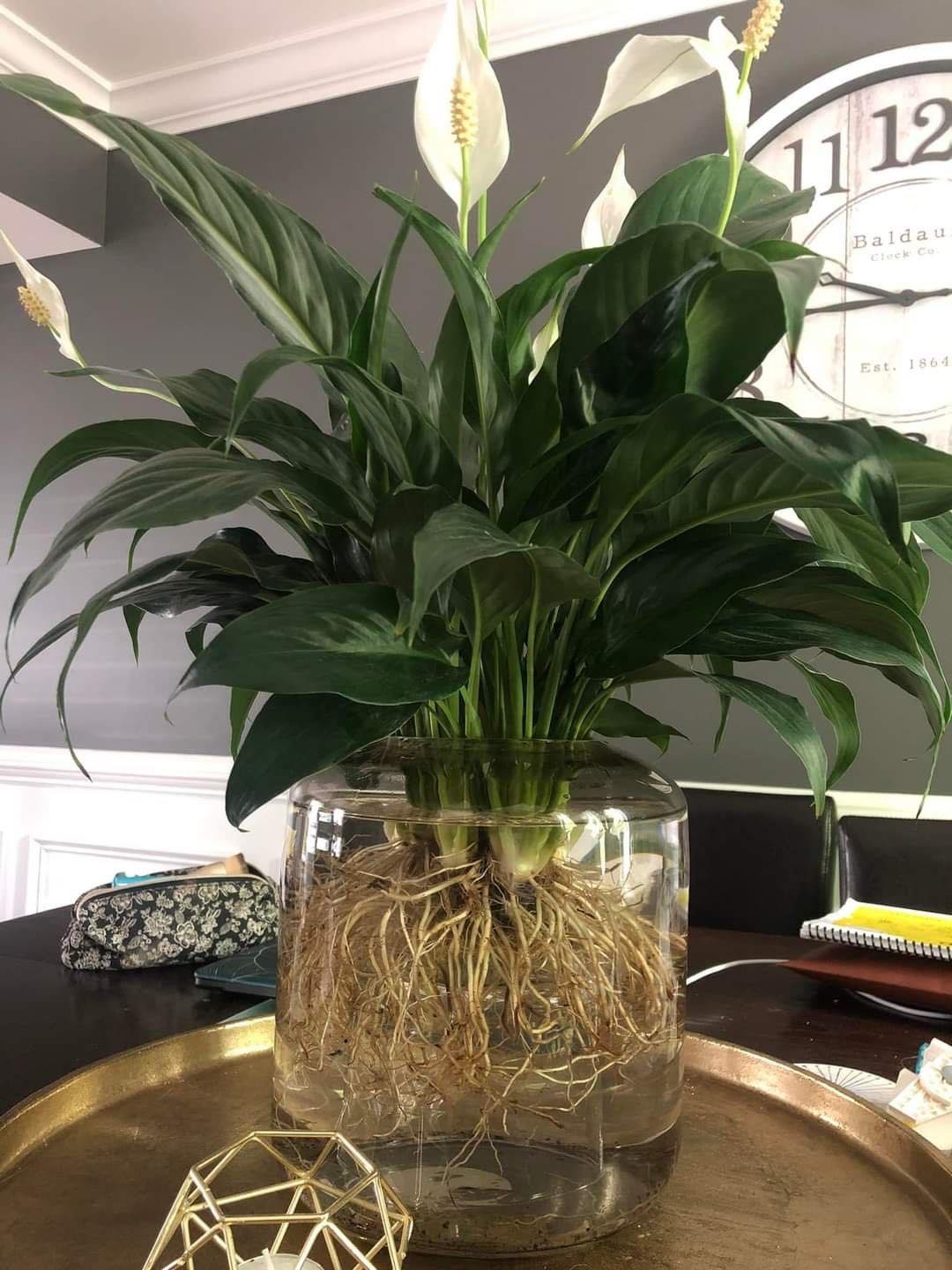
3. Overwatering
This is the exact opposite scenario of the previous mistake. When beginner gardeners find out that peace lilies love moist soil (as iterated in the last point), they overdo it and end up leaving them in soggy soil conditions. The wet feet then lead to root rot, fungal infection, and harbor pests.
Your peace lily might look limp or yellow despite the excess water, which is a key indicator that something’s wrong. Try lifting up the pot gently! If it is unusually heavy or if there is an excessive leakage, you may have pooled water at the bottom of the container.
All of these issues will hamper blooming. It may be tricky to get the sweet spot for watering, but in general, water the plant once a week. You can even use a moisture meter, which tells the exact saturation level of the substrate.
4. Lack of Nutrients

Did you know that regular potting mix may not provide sufficient nutrients to support healthy spathe production? Phosphorus and potassium, along with micronutrients such as magnesium and calcium, are necessary for blooms.
Even a well-lit, well-watered peace lily won’t flower without proper nourishment. Here is where fertilizers come to the rescue! Use a liquid fertilizer of the NPK ratio 5:10:10 diluted to half its strength to focus more on blooms.
Apply the fertilizer once every 4-6 weeks in the active growing season and halt it entirely during the winter.
Note: Remember to use a fertilizer low in nitrogen content as this promotes lush foliage growth and not flowers.
Pro Tip: Flush the soil out completely every 2-4 months to leach out excessive fertilizer buildup.
5. Improper Environment

The environment plays an important role in determining the health of a peace lily. These tropical plants thrive in warm conditions, ranging from 65°F to 85°F (18°C to 30°C). Anything below that will slow down growth and halt blooming. Remember that potting mixes with low or very high water retention can cause silent stress to your plant.
Also, pay attention to the quality of water being used. Hard and contaminated water will misbalance the pH and nutrient levels of the soil. If you spot white residue left behind on the leaves, replace the regular tap water with distilled, rainwater, or filtered water.
Remember that, being tropical plants, they also love above-average humidity levels (50-60%); misting or using humidifiers is a must. You can use a hygrometer to accurately note the air moisture level.
6. Not Removing Spent Blooms

Sometimes letting go of the peace lily blooms is the way to get more! Dying or spent spathes need to be removed to allow the plant to redirect its energy to producing healthier and more bracts.
Pruning away yellowing or damaged foliage is also necessary. Simply use a pair of scissors and cut off the leaf or flower right at the base or stalk, just above the leaf node. The plant will gradually replace the pruned portion with fresh growth.
7. Wrong Pot Size
see continuation on next page
ADVERTISEMENT
