
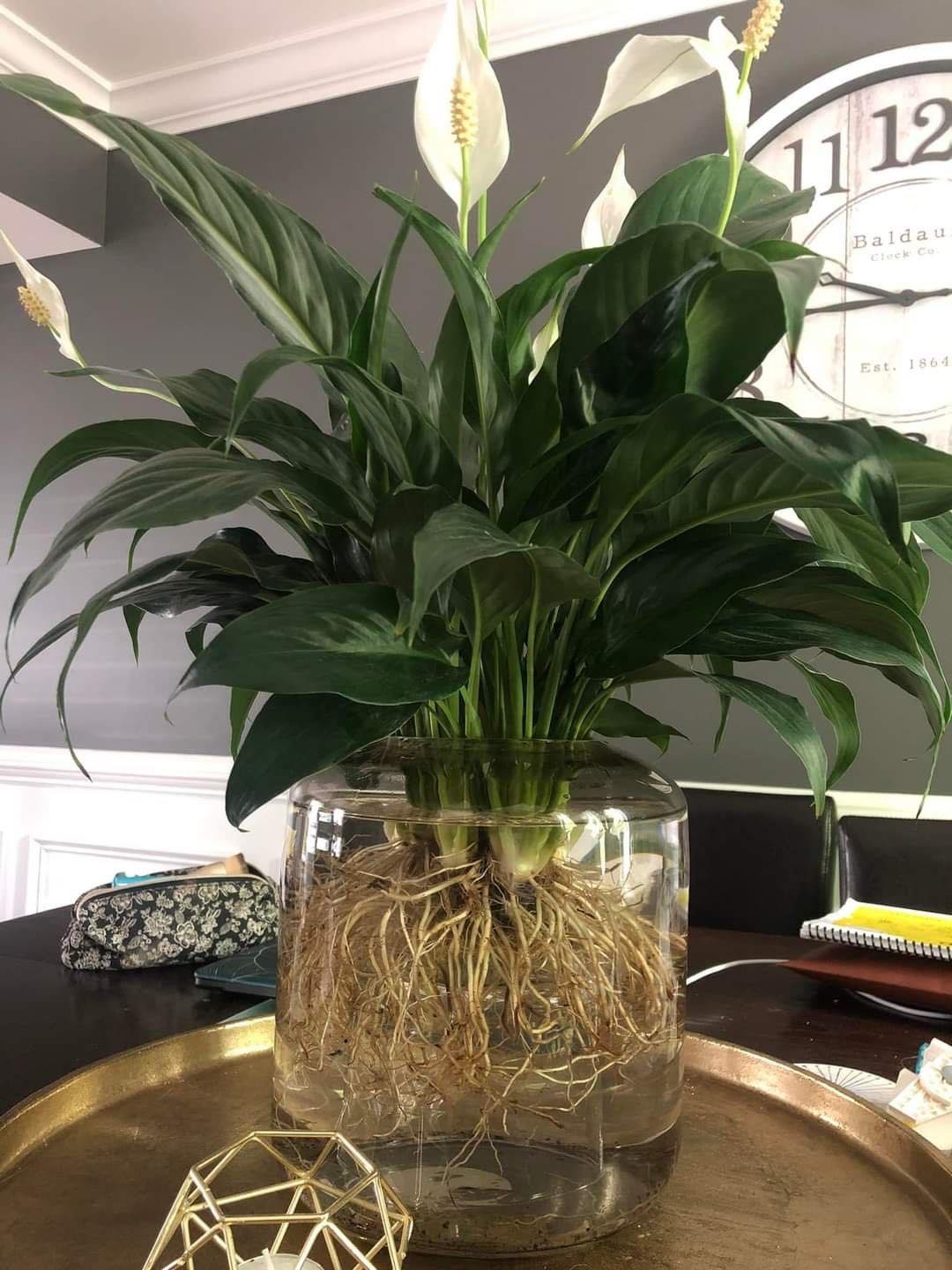
7. Wrong Pot Size

Getting the right pot size for peace lilies is like threading a needle. It can be quite confusing because a pot too small will leave no room for the roots to grow. On the other hand, if the pot is excessively large, the soil will retain too much moisture and invite diseases.
In most cases, a 4-5 inches pot will suffice for a starter plant, but you must increase the size by 2 inches each repotting session. Only repot the plant when you see roots sticking out of the drainage holes at the bottom of the container.
A rule of thumb is that the container should be no more than 1-2 inches larger in diameter than the root ball of your peace lily. Too much room in the pot diverts energy to root development rather than bloom production.
8. Acclimatization Shock

A peace lily can refuse to grow or produce spathes for a while after being repotted or shifted to a new location. This is because the root system needs to stabilize while the shoot must adapt to the new environment.
Clear signs of transplant shock are stunted or no growth, drooping foliage, and a lacklustre appearance for a couple of weeks after the repotting process is complete.
During this period, it is essential to let the plant be and provide it with basic care. Once it acclimatizes, it will automatically begin to grow and produce blooms. Avoid fertilizing and moving it while providing just the right amount of water during this time.
9. Pest Attack

Pests have always been the enemies of plants and gardeners! If you notice that your peace lily is not blooming, consider checking for a pest infestation. Mealybugs hide in the dense foliage and slowly suck the life out of your plant, literally!
You must constantly check the undersides of the leaves, keeping an eye out for sticky residue, cotton-like patches, or crawling bugs.
Use preventive methods, like improving the air circulation and regular pruning, to control an infestation. However, if it has already occurred, use pesticides like neem oil to eliminate the bugs. In severe cases, you may also need to completely remove the damaged portion of the plant.
10. Just Wait
Peace lilies do not have a fixed bloom time. That’s why it can be frustrating to keep track of when it’s resting or flowering. Since there is no particular season for it to bloom indoors, constantly changing its growing conditions to force it to flower can add unnecessary stress.
You need to realise that your plant may just need time to revitalize. A few months of fewer flowers (especially in fall and winter) shouldn’t be an issue, and there is no need to panic.
With a bit of patience and the right care, your peace lily will reward you with beautiful white bracts once again. Keep these tips in mind, and soon your plant will be back to its glory days!
ADVERTISEMENT
