
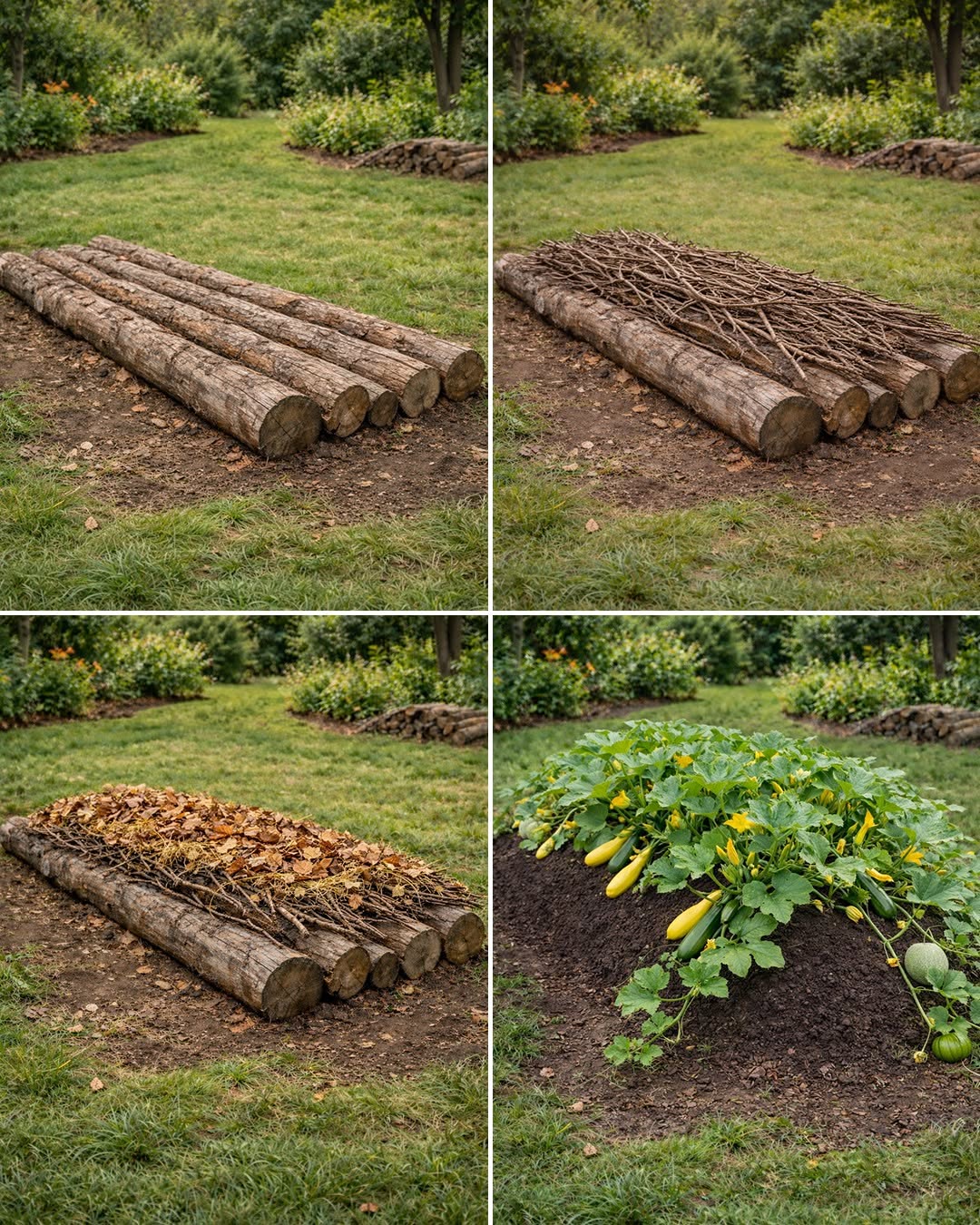
Extra Tips for Better Results
Choose the Right Location
- Full sun is best (6–8 hours daily)
- Avoid low areas where water pools
- Keep at least 50 cm (20 inches) from fences
Plant Densely
Hugelkultur beds support dense planting because:
- Roots grow vertically and horizontally
- Moisture is abundant
- Nutrients are continuously released
Dense planting also shades the soil and reduces evaporation.
Mulch the Surface
Cover with:
- Straw
- Dry leaves
- Grass clippings
Mulch reduces water loss and prevents erosion.
Expect Some Nitrogen Use Early
Fresh wood may temporarily absorb nitrogen during decomposition.
To compensate:
- Add compost or manure to the top layer
- Plant legumes (beans, peas) in the first year
- Use organic fertilizer if needed
Longevity
A well‑built hugelkultur mound can remain productive for:
- 5–10 years (softwood base)
- 10–20+ years (hardwood base)
Common Mistakes to Avoid
- Using treated or painted wood
- Making slopes too steep
- Skipping compost in the top layer
- Planting root vegetables in year one
- Building too small (larger mounds perform better)
Why Many Gardeners Switch to Hugelkultur
- Uses free materials
- Reduces watering
- Improves poor soil
- Raises planting area (better drainage)
- Produces heavy harvests
- Requires little maintenance after setup
Hugelkultur turns yard waste into a self‑watering garden system.
One afternoon of stacking can create years of low‑maintenance harvests 🌱
ADVERTISEMENT
