
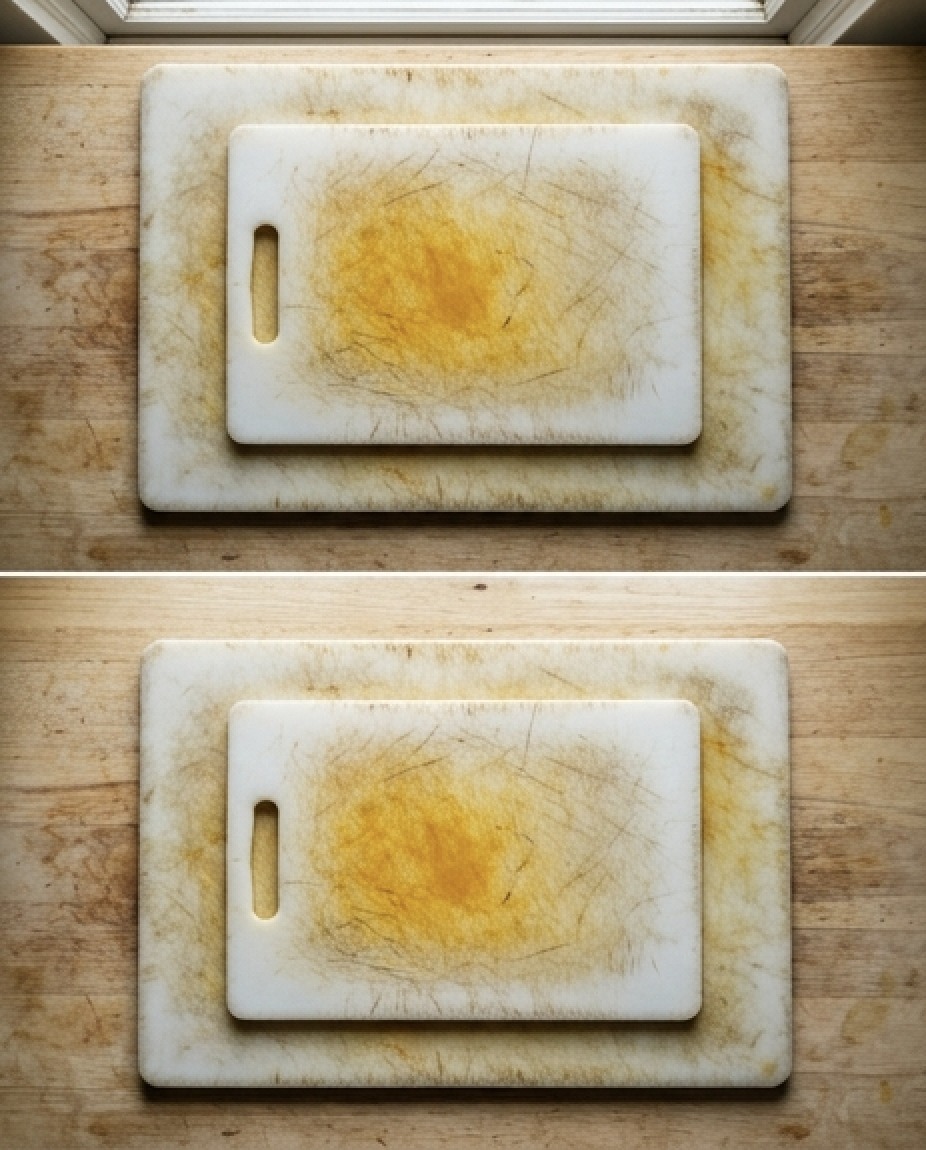
Even when well-washed, a plastic cutting board can quickly become stained and yellowed over time. Fortunately, a few simple tricks can easily restore its original shine.
Even after a good wash, does your cutting board still look marked, yellowed, or dull? This is a very common problem in many kitchens. Between tomatoes, carrots, spices, or other highly pigmented foods, plastic boards often end up with unflattering stains that make them look dirty… even when they’ve been thoroughly cleaned. Luckily, some very simple home remedies can give them a second life without effort or complicated products.
Why Plastic Cutting Boards Stain So Quickly
At first glance, plastic seems smooth and easy to clean. However, it has tiny imperfections invisible to the naked eye that easily trap pigments, food residues, and even odors.
Each cut with a knife also creates small marks on the surface. Over time, these micro-scratches become true dirt traps where food residues settle.
As a result, even after a sponge wash, the board can appear yellowed, have orange marks, or emit an unpleasant lingering odor.
This is why a simple regular wash isn’t always enough. A deeper clean from time to time restores a much cleaner appearance.
The Baking Soda and Lemon Trick to Whiten the Board
Among the most popular methods to revive a plastic board, the combination of baking soda and lemon often works wonders.
Highly appreciated in traditional home remedies, this mixture helps clean the surface deeply while restoring the plastic’s shine.
How to do it:
- Place the clean, dry board on your countertop.
- Generously sprinkle baking soda over the entire surface.
- Squeeze lemon juice over it until the surface is moistened.
- Let the mixture fizz slightly for a few moments.
- Scrub with a sponge in circular motions.
Pay extra attention to the most marked areas, then rinse thoroughly with warm water.
Very often, the difference is visible from the first use.
Stronger Method for Stubborn Stains
see continuation on next page
ADVERTISEMENT
