
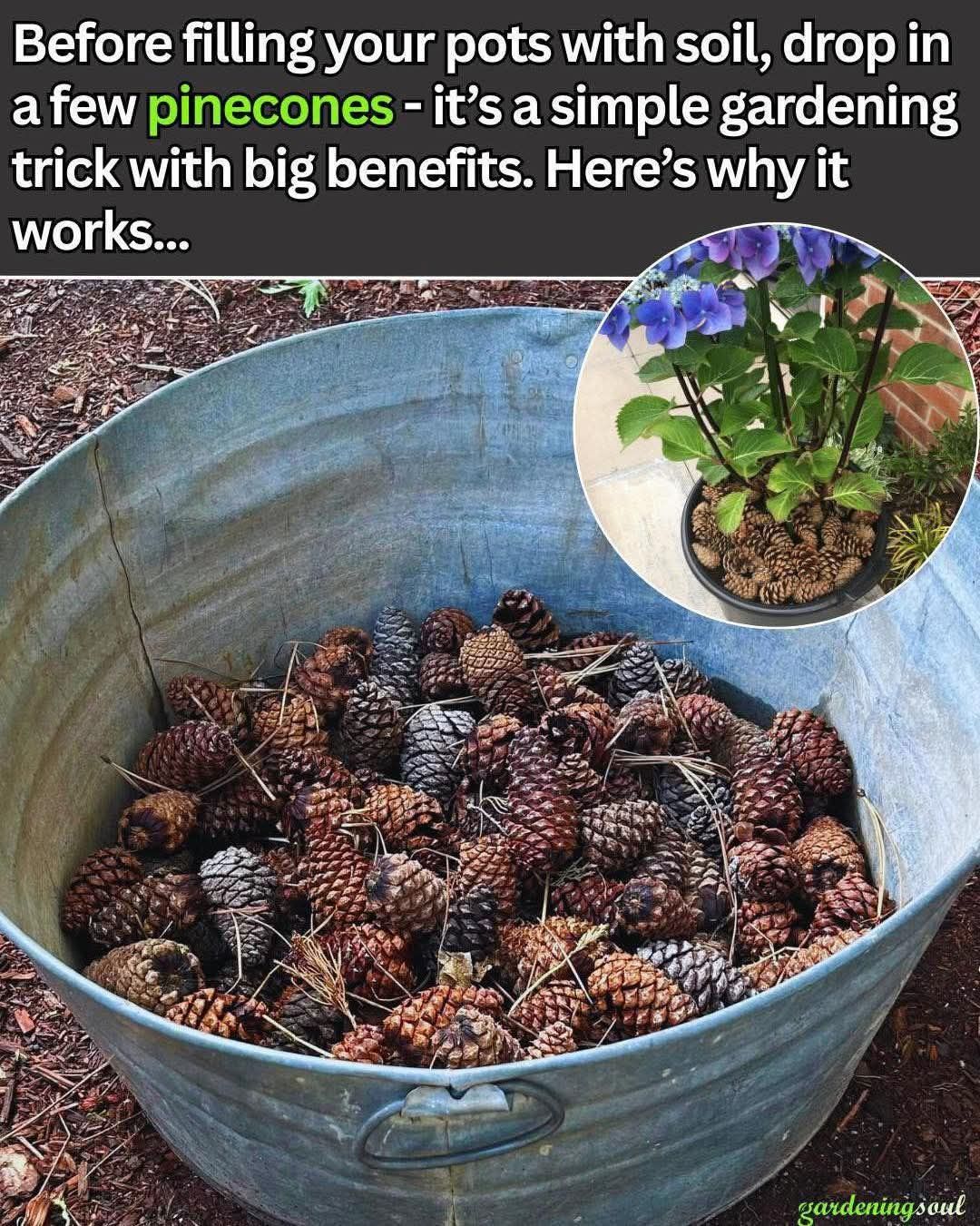
How Long Do Pinecones Last in Containers?
Pinecones decompose slowly, usually over two to three years, depending on moisture levels and microbial activity in your soil.
You can check them during repotting – if they’re starting to crumble or compress, simply replace them with fresh cones. Their gradual breakdown makes them an excellent long-term filler that also enriches soil as they age.
Comparing Pinecones to Other Planter Fillers
| Filler Type | Weight | Drainage | Biodegradable | Adds Nutrients | Longevity |
|---|---|---|---|---|---|
| Gravel or rocks | Heavy | Poor (can trap water) | No | No | Indefinite |
| Styrofoam or plastic | Light | Fair | No | No | 1–2 years |
| Bark chips | Moderate | Good | Yes | Minimal | 1–2 years |
| Pinecones | Very light | Excellent | Yes | Yes (slow release) | 2–3 years |
It’s clear that pinecones strike the best balance between performance and sustainability – especially if you prefer gardening with natural, biodegradable materials.
What About Pine Needles?
If you’re collecting pinecones, you’ll often end up with a handful of pine needles too – don’t throw those away!
They make an excellent mulch layer on top of pots and garden beds, helping to:
- Retain soil moisture
- Regulate temperature
- Deter slugs and snails
- Gently acidify soil for plants like azaleas, hydrangeas, and blueberries
Together, pinecones and pine needles form a perfect zero-waste combination for natural, organic gardening.
Adding pinecones to your planters is a simple, eco-friendly step that makes a real difference in plant health and sustainability.
They improve drainage, lighten containers, prevent rot, and even feed the soil as they break down – all while saving money and reducing waste.
ADVERTISEMENT
