
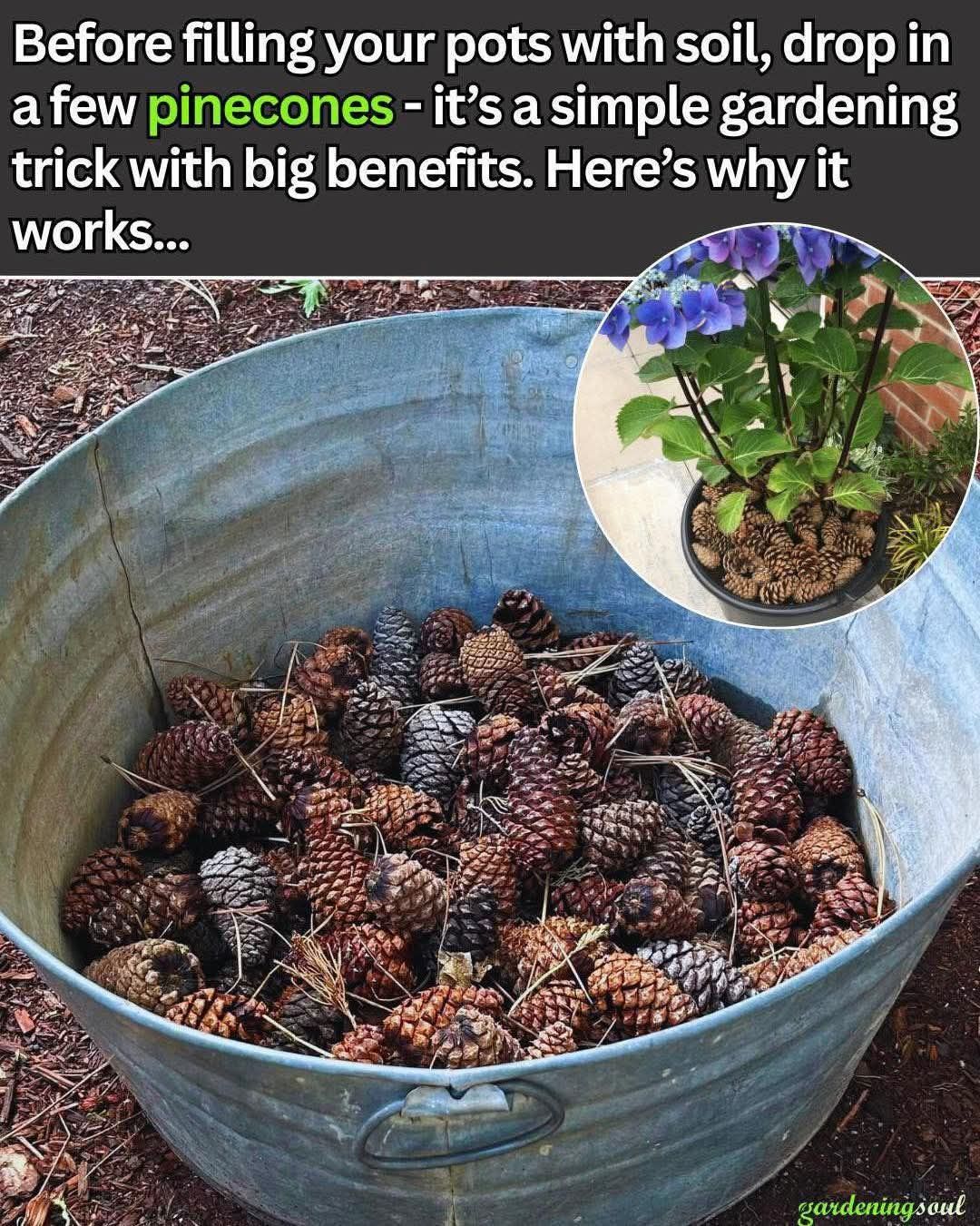
How to Prepare Pinecones for Planter Use
Before you toss pinecones straight into your pots, it’s best to prepare them properly to ensure they’re clean, dry, and pest-free.
Here’s a simple method to get them ready for use:
Step 1: Collect and Inspect
Gather pinecones that are fully opened and dry – these are lighter and contain more air pockets. Avoid closed, sticky, or green cones, as they may still hold moisture and sap. Shake or tap them lightly to remove debris and insects.
Step 2: Bake or Sun-Dry Them
To sterilize pinecones and kill any pests or fungal spores, bake them in the oven at 200°F (about 93°C) for 20–30 minutes. Alternatively, you can sun-dry them outdoors for several days in warm weather, turning occasionally.
Step 3: Cool and Store
Once cooled, store pinecones in a dry, ventilated space until you’re ready to use them. Avoid sealing them in plastic bags – they need airflow to stay crisp and dry.
Prepared properly, pinecones can last for years inside planters without molding or collapsing.
How to Use Pinecones in Your Planter
Adding pinecones to your containers couldn’t be simpler. Here’s how to layer them correctly for maximum benefit:
- Fill the bottom one-third of your container with pinecones. Arrange them loosely so there’s still plenty of space for air and water to move through.
- Add a layer of landscape fabric or mesh over the pinecones if you want to keep soil from washing down between them. (Optional, but useful for fine potting mixes.)
- Top with your potting soil and plant as usual.
That’s it – no fancy tools or additives required.
If your container is especially large, you can mix pinecones with other organic fillers like bark chips, twigs, or coconut husks to maintain drainage while extending your potting mix.
Which Plants Benefit Most From Pinecone Drainage?
Almost any plant that dislikes soggy roots will thrive with a layer of pinecones below the soil. These include:
- Succulents and cacti – prevent root rot by maintaining drier lower layers.
- Herbs like rosemary, lavender, and thyme – all prefer well-drained soil and benefit from the air gaps pinecones create.
- Flowering annuals such as petunias, geraniums, and zinnias – stay healthier when excess water drains freely.
- Indoor houseplants – especially those in decorative pots without drainage holes. Pinecones can act as a safe, lightweight substitute for gravel or clay pellets.
For moisture-loving plants like ferns or peace lilies, pinecones can still be used – just use fewer and top with richer soil to retain more moisture.
Can Pinecones Replace Potting Soil?
No – pinecones are a supplement, not a substitute for soil. They’re meant to fill the bottom portion of deep containers, not to grow plants directly in.
Think of them as the “foundation layer” that improves drainage, reduces soil use, and prevents water stagnation.
The top two-thirds of the container should always be filled with high-quality potting mix suited to your plant type.
see continuation on next page
ADVERTISEMENT
