
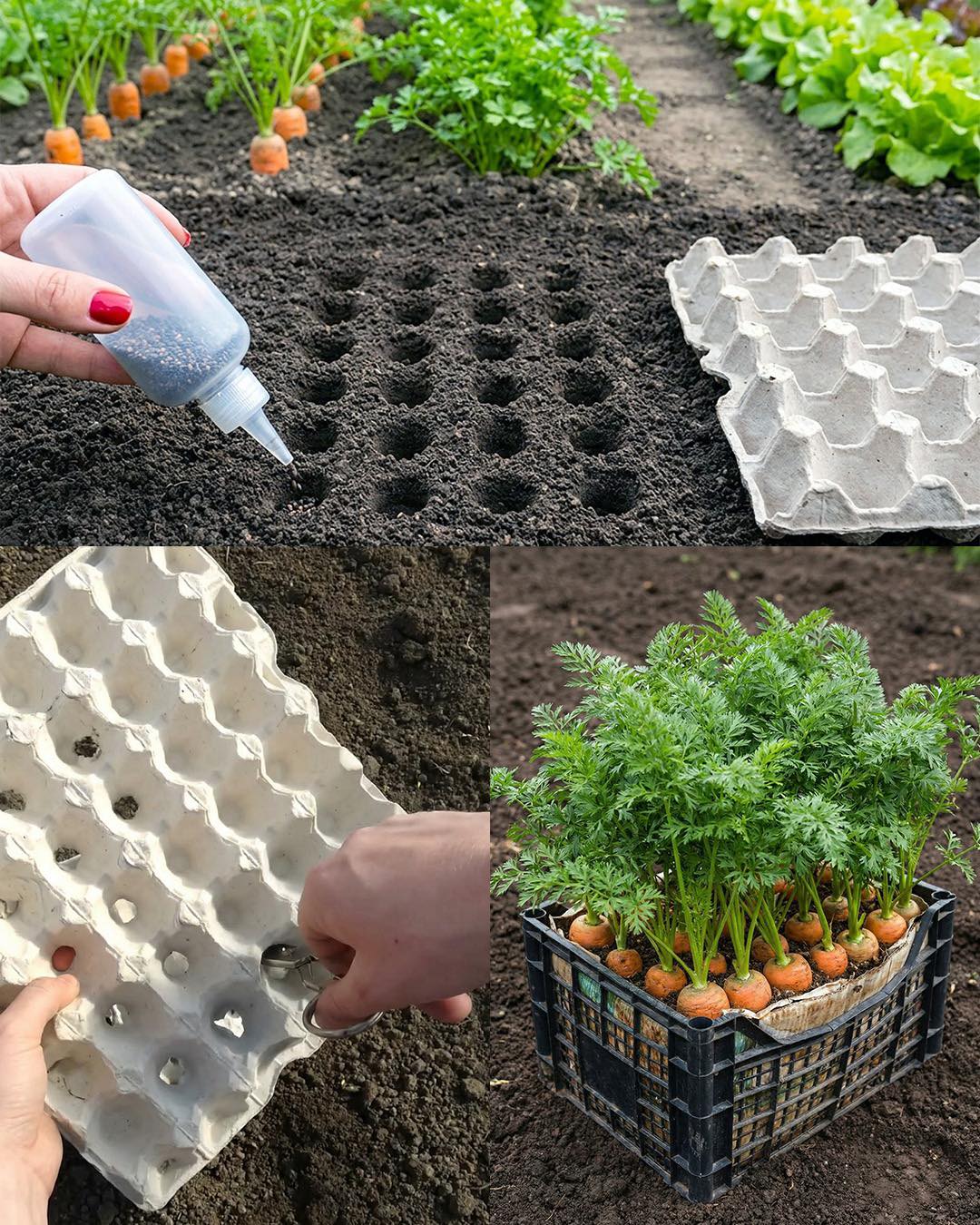
Growing carrots from seed can be frustrating. The seeds are tiny, easy to sow too thickly, and often germinate unevenly. That usually means extra work later: thinning crowded seedlings, pulling weeds, and trying to keep the soil evenly moist while the roots develop underground. Fortunately, there is a simple solution that makes carrot planting far more organized: using cardboard egg cartons.
This method helps create even spacing, reduces waste, and makes sowing much more precise. In fact, there are two practical ways to use egg cartons for carrots. One uses the carton as a planting template in the soil, and the other uses the carton itself as a biodegradable planting tray. Both are excellent, depending on how much preparation you want to do.
Why Egg Cartons Work So Well
Cardboard egg trays are surprisingly useful in the garden. Their evenly spaced cells help create consistent planting distances, which is especially important for root vegetables like carrots. Proper spacing gives each root enough room to grow straight and full without crowding.
Another advantage is moisture control. Cardboard absorbs and holds moisture for a while, which helps keep the planting area from drying out too quickly. It also acts as a light barrier, which can reduce weed growth between seedlings. Since the material softens and breaks down over time, it can be used directly in the garden if it is made from plain, uncoated cellulose cardboard.
Method 1: Use the Egg Carton as a Soil Marker
This is the easiest option and a great choice if you want faster sowing with minimal setup.
What to Do
Prepare your garden bed so the soil is loose, fine, and free of stones. Carrots grow best in soft soil that allows the roots to develop straight down. If the bed is compacted or full of clumps, the roots may fork or become misshapen.
Take an empty cardboard egg carton and press it firmly into the soil. This creates a pattern of small, evenly spaced indentations. These little holes become your planting spots. Once you lift the carton away, you have a neat grid that makes sowing easier and more accurate.
Place a small number of carrot seeds in each indentation. Because carrot seeds are so tiny, many gardeners prefer using a small bottle with a narrow opening to shake seeds out more precisely. Cover the seeds lightly with fine soil, since carrots should only be planted shallowly. Then water gently.
Benefits of This Method
This approach is quick, simple, and ideal for direct sowing. It reduces guesswork, keeps rows tidy, and helps prevent sowing too densely. It can also be used for other small seeds such as parsley, lettuce, dill, or arugula.
Method 2: Plant Carrots in the Egg Carton Itself
see continuation on next page
ADVERTISEMENT
