
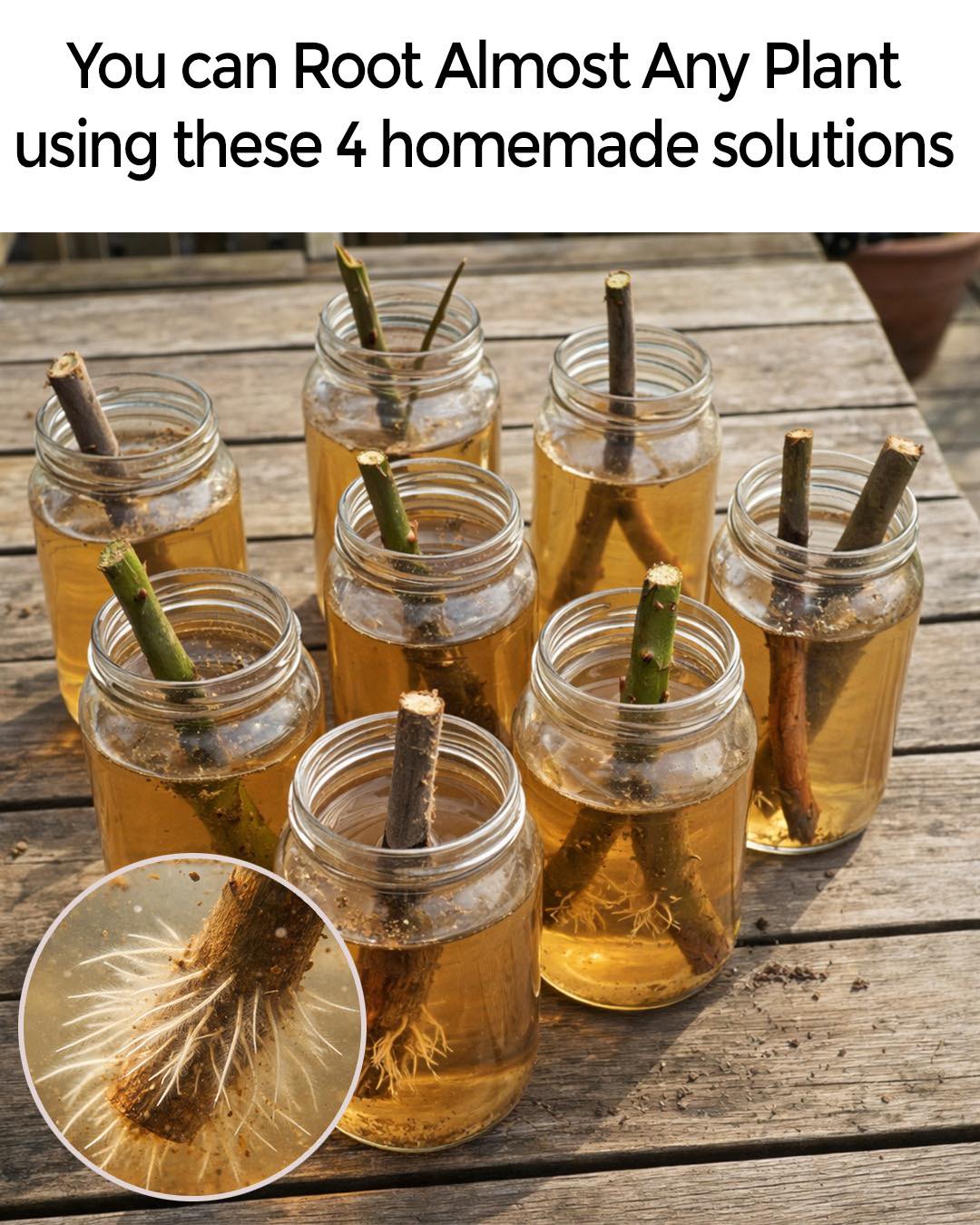
Step 1: How to Take Root Cuttings the Right Way
1) Pick the right roots
Choose roots that are:
- Firm, pale/tan, and healthy-looking
- About the thickness of a pencil (or slightly thinner/thicker depending on the plant)
- Free of mushy spots, black rot, or strong sour smells
2) Make clean, deliberate cuts
Use clean scissors or a knife.
Best cutting size:
- 5–10 cm (2–4 inches) for most plants
- For thicker roots, you can go a little longer
3) Mark the “top” end
This prevents planting upside-down (a very common reason for failure).
Easy method:
- Make the top end a straight cut
- Make the bottom end a slanted cut
So later you instantly know which end goes up.
4) Keep them from drying out
Root pieces dry fast.
Place cuttings in:
- A damp paper towel inside a bag, or
- A container with slightly damp peat/coco coir
Keep them cool while you prepare your pots.
Step 2: Use the Right Soil Mix (This Matters More Than Any “Rooting Hormone”)
Root cuttings hate heavy, waterlogged soil.
A simple rooting mix:
- 50% coco coir or peat
- 50% perlite or coarse sand
You want a mix that holds gentle moisture but still has air pockets. Roots need oxygen.
Step 3: Planting Root Cuttings (Orientation + Depth)
Option A: Vertical planting (easy for beginners)
- Push the cutting into the mix so the top end is just below the surface
- Leave about 1 cm (½ inch) of mix above the top end
Option B: Horizontal planting (good for thin roots)
- Lay the cutting flat
- Cover with 1–2 cm (½–¾ inch) of mix
After planting:
- Water lightly to settle the mix
- The soil should feel like a wrung-out sponge, not wet mud
4 Homemade Rooting Helpers (Natural and Simple)
see continuation on next page
ADVERTISEMENT
