
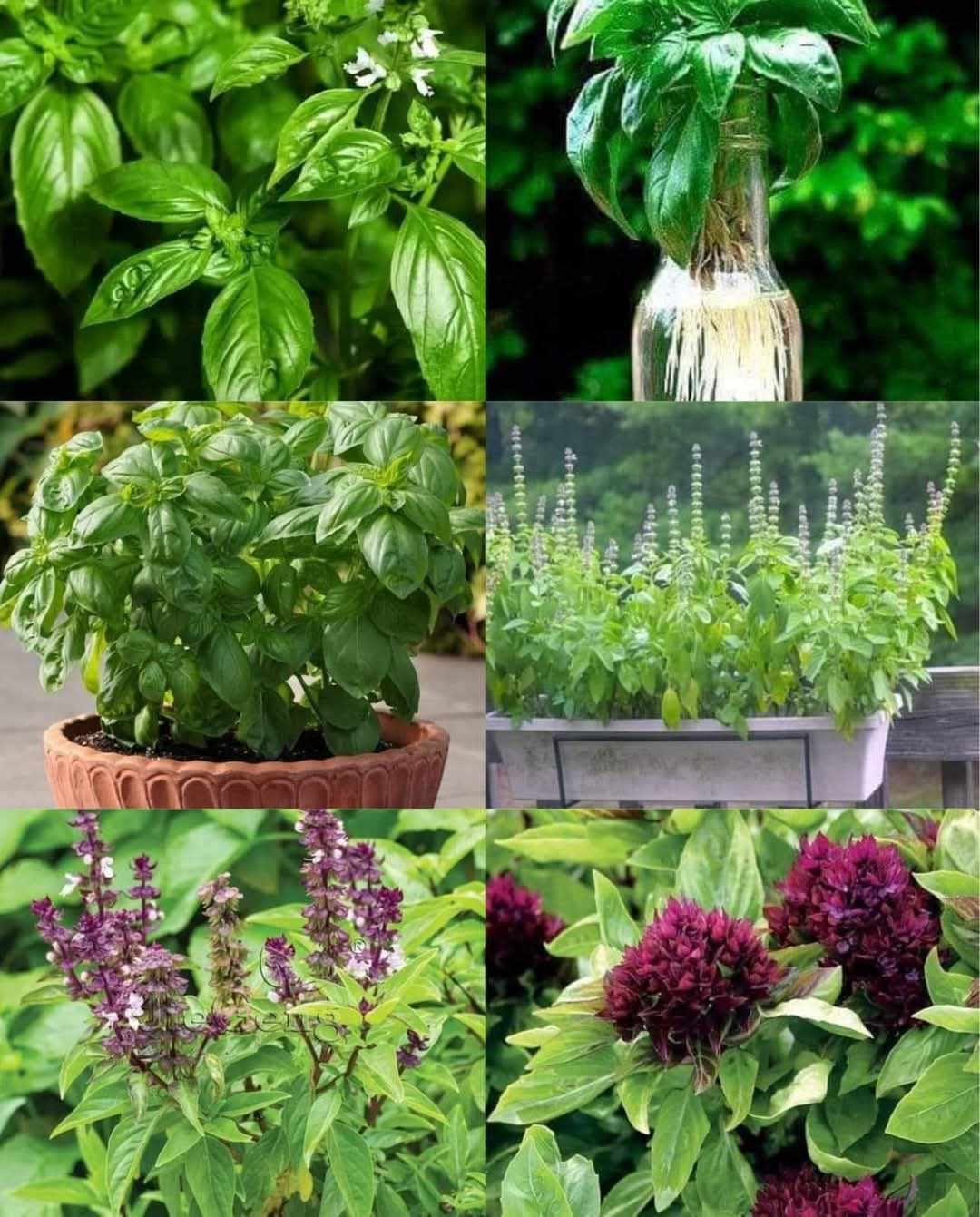
How to Pot Live Basil Plants
Live starter plants give you a great head start. At the garden center, choose the healthiest plants (avoid tall, thin, weak ones). Inspect leaves for pests—leaves should be dark green without holes, spots, or curled edges.
Quarantine new plants for a week at home to ensure they are pest-free.
When transplanting:
-
Remove some soil from the final pot.
-
Position the seedling slightly above soil level.
-
Hold the stem base, flip the pot, and gently pull the seedling out.
-
Place it in the new container and fill around it firmly but not tightly.
Where to Grow Basil Indoors
While sunlight is ideal, only very bright windows can provide enough natural light indoors. A strongly lit window can reduce your need for grow lights.
Light Requirements
Basil needs the equivalent of 6 or more hours of direct sunlight per day. A grow light must be very bright—place a Sansi bulb about 6 inches above the plant.
How Many Hours Under Grow Lights?
Basil is a “long-day” plant—if exposed to more than 12 hours of light daily, it begins to end its life cycle and produce seeds. To keep it in a vegetative state for continual harvests, set your timer to 10 hours of grow light per day.
Temperature
Basil is a warm-weather crop. Warm temperatures speed up metabolism, but excessive heat causes wilting and increases disease risk.
-
Ideal temperature: 80°F
-
Good range: 50–90°F
Growth Timeline
Week 1–2: Check for Sprouts
Sprouts can appear in as little as 3 days, though 5 days is typical. If 7 days pass with no sprouts, the setup may be too cold.
Week 2: Thin Seedlings
Thin plants to one seedling per spot, keeping the strongest one. In a ¼-liter pot, you should end up with 5 basil plants.
If seedlings are less than 1 inch tall, stretched, or floppy, they likely need more light.
Week 4: How to Prune Basil
Once the basil plant has 3 sets of mature leaves, it’s ready for pruning.
Cut the top set, leaving the two lower sets intact. New branches will grow from these nodes. Repeat pruning as the plant grows to maintain a bushy shape.
Month 2: Harvesting Basil
Continue harvesting to encourage growth. To take just a couple of leaves, pick them from areas where new leaves are forming.
For a larger harvest, cut an entire stem, but avoid taking more than one-third of the plant at a time.
Month 6: End of Life
As basil matures, it will want to produce seeds. Delay this by cutting flower stems as soon as they appear.
Best Containers for Basil
Self-watering, semi-porous ceramic planters help maintain steady moisture, preventing both dryness and overwatering.
Best Soil for Basil
A standard potting mix works best because basil prefers a rich, moist root zone.
Best Fertilizers
Start with a balanced mix (NPK 10-10-10), then switch to a nitrogen-rich fertilizer (NPK 10-5-5) once the plant is established.
Conclusion
If you want to grow basil at home, following these instructions and guidelines will help you achieve a healthy, high-quality plant.
ADVERTISEMENT
