
Parsley is one of those kitchen garden staples that earns its place season after season. It is useful, fragrant, productive, and surprisingly easy to grow once you understand what it needs. Still, many gardeners run into the same problem: parsley seeds are tiny, slow to germinate, and easy to sow too thickly. That often leads to wasted seed, uneven spacing, extra thinning, and more bending and fiddling in the garden than necessary.
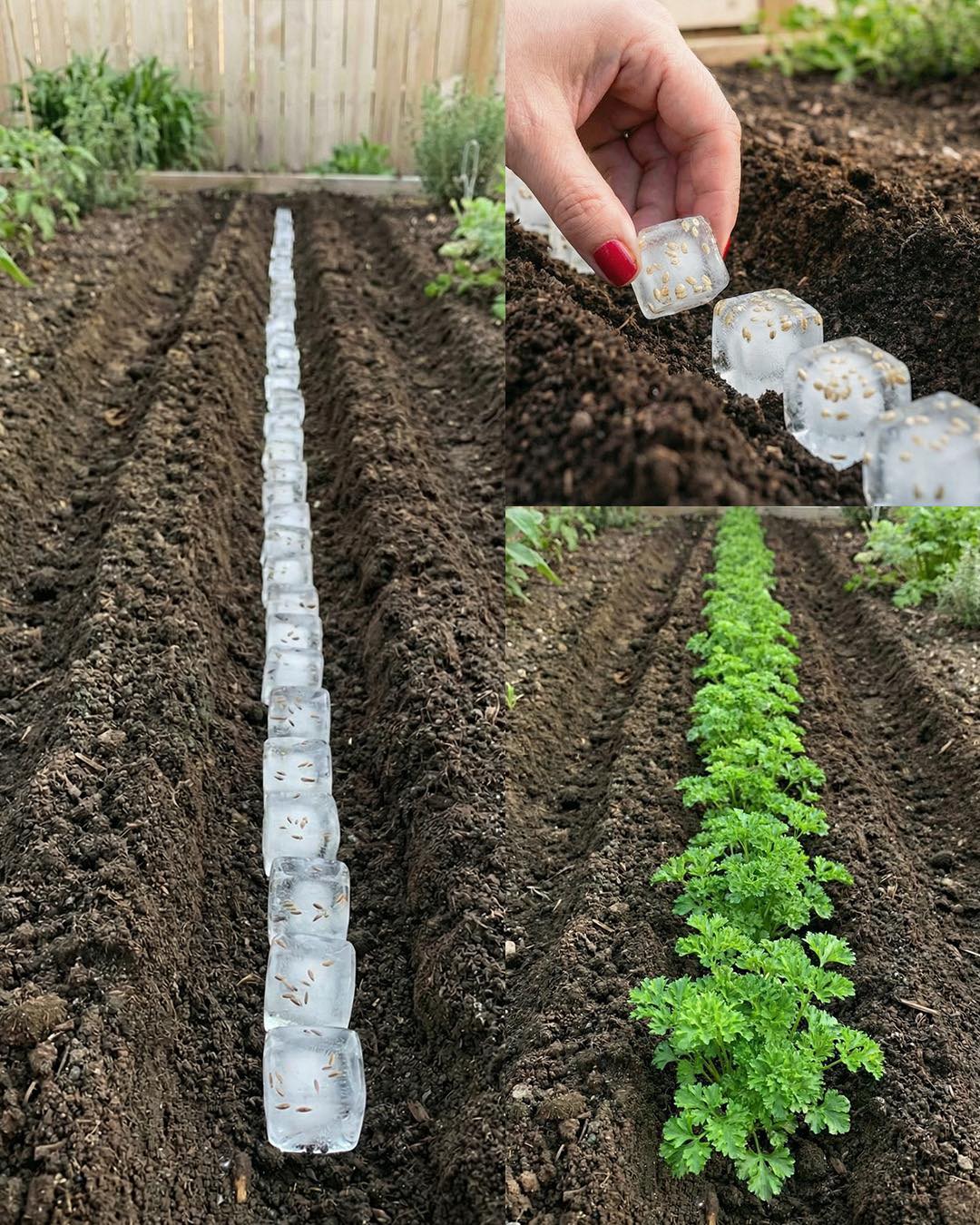
A simple planting method can make the whole process easier while improving seed placement and early moisture control. Instead of scattering seeds directly into the soil, you can pre-space them in frozen water and plant them one by one. This approach helps create neater rows, reduces the need for thinning, and makes sowing more comfortable and organized. It is especially useful for gardeners who want a cleaner planting routine and more consistent results.
In this article, you will learn how to plant parsley using a clever pre-sowing method, why it works, and how to care for the crop afterward for a healthy, abundant harvest.
Why Parsley Can Be Tricky to Grow
Parsley is not difficult, but it does ask for patience. One of the main reasons gardeners struggle with it is that the seeds germinate slowly. Even under good conditions, parsley can take 15 to 25 days to sprout. During that time, the soil needs to stay lightly moist without becoming soggy.
Another issue is seed size. Because parsley seeds are small, it is easy to sow too many in one place. When seedlings come up crowded together, they compete for space, air, and nutrients. That means extra work later, since the plants need thinning to grow well.
A more deliberate sowing method solves several of these issues at once. It helps you place seeds exactly where you want them, maintain spacing from the start, and give them a gentle supply of moisture as they settle into the soil.
A Smarter Way to Sow Parsley
This planting technique starts indoors before you ever step into the garden. The idea is simple: place one parsley seed into each compartment of an ice cube tray, fill the tray with water, and freeze it. Once frozen, the cubes become ready-made seed starters that can be placed directly into prepared garden rows.
This method offers several advantages:
Precise spacing: Each cube contains a single seed, so you control plant distance from the very beginning.
Less bending and handling: Much of the setup is done comfortably indoors, making garden work faster and easier later.
Gentle watering: As the ice melts in the soil, it moistens the seed without displacing it or creating muddy puddles.
Cleaner sowing: You avoid the common problem of accidentally dropping too many seeds in one spot.
It is a simple system, but it can save time and reduce garden effort while setting the stage for a stronger crop.
What You Will Need
see continuation on next page
ADVERTISEMENT
